
Measuring the effectiveness of internal communication
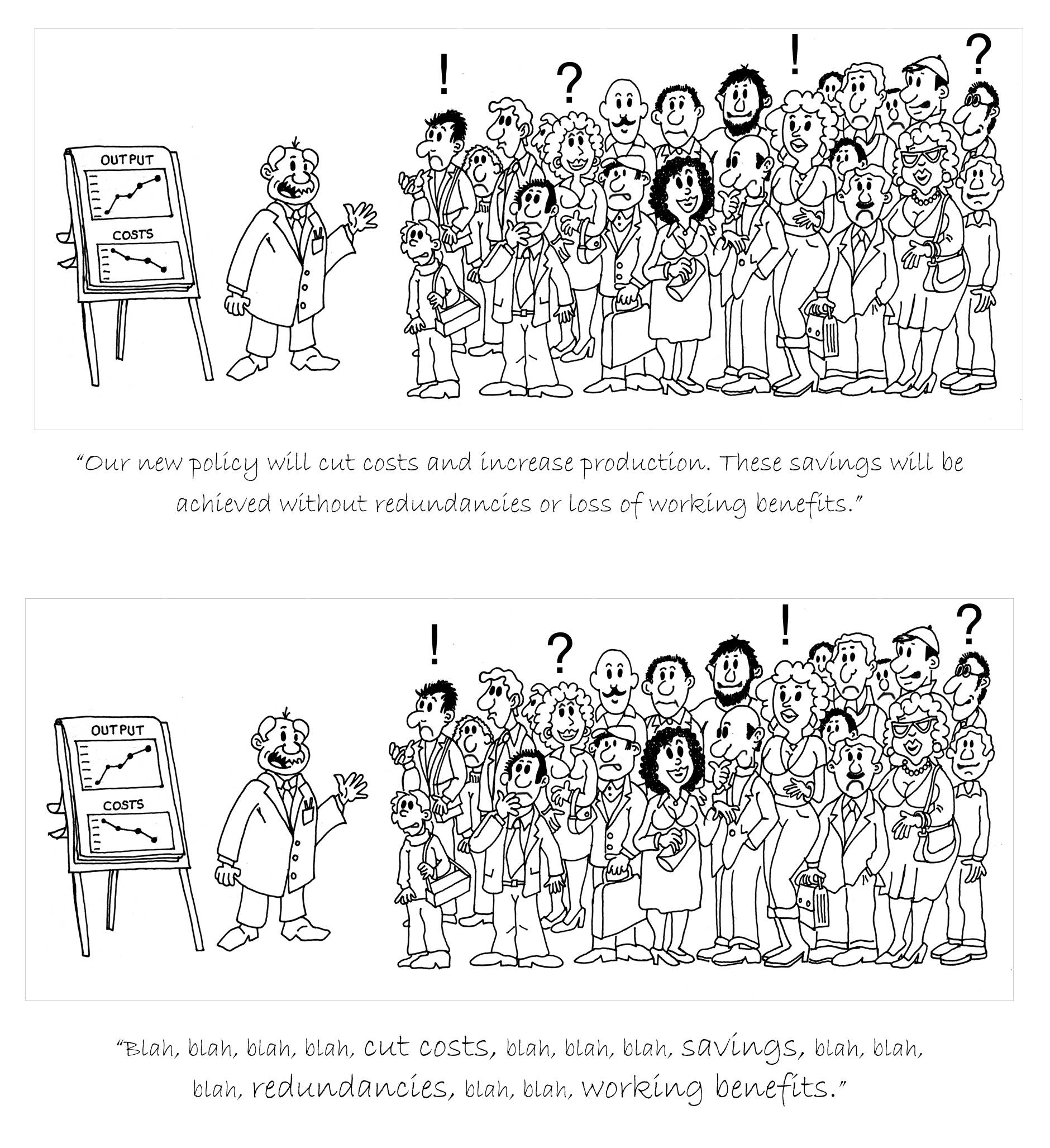
There is little point in measuring that fact we have broadast a message without working out what was actually heard and understood.
 Still relevant today the 2005 FEIEA (the Federation of Business Communicator Associations in Europe) survey of it’s members in 13 countries across showed that...
- 85 per cent say internal communication in their organisations has become more important in the last few years
- 92 per cent said their most time consuming job remains internal magazine production.
- 46 per cent believe the notice-boards are an effective communication tool
- 69 per cent of internal communication in 2005 is still ‘top down’
- 28 per cent is lateral or cross-level communication
- 1 per cent of communicators is bottom-up communication
They listed the five biggest barriers to effective communication as
- Low management commitment to communication (76 per cent),
- Lack of time (65 per cent),
- Ineffective organisation structure (59 per cent),
- Insufficient communications skills (50 per cent) and
- Ill-defined communication goals (44 per cent).
But what do such surveys, audits and reports show us. Statistics and Politicians can be easily slipped into the same sentence as spin, mis-information and not-invented-here.
For internal communication to earn its place in the boardroom or at least secure some influence over the Senior Management Team and their decisions the link between the communication initiatives and the bottom line results needs to be established. If the statistics above were from our own organisation we might develop some opinions on what needs to happen next, and hopefully it won’t be put up more notice boards or increase top down team briefs...
With the right approach to measuring the effectiveness of internal communication it is more than possible to demonstrate help internal communication helps every other well recognised department fulfil their role. Without good and robust measurement systems in place that are trusted by other Senior Managers it will be hard to argue the case for more or even continued funding.
Levels
- It is possible to measure a whole range of the elements
- The Message itself
- The Programme the message is apart of
- The Channel used to transmit / receive the message
- The Retention of the message by those who received it
- The Deployment of the message in the behaviour change of those who received it
- The Impact on the Programme / Project / Business Unit
It is possible to collect hard and soft data (quantitative & qualitative) about any of the above depending on whether you require purely the hard numbers or the reactions of those involved.
First things first
Before you get out your calculators and start counting be sure you have a very clear understanding of the Senior Management goals or ambitions for the business and the relevance of the communication initiative you are measuring.
- Why is more important than what and what is more important than how.
Once you’ve established why you are collecting the information and its link to the strategic goals of the organisation you can more easily workout what to measure. Once you’ve established the why and the what it is relatively easy to work out how you are going to set about measuring the communication.
Effectiveness and Efficiency
Remember to balance the data search between the two of the main value drivers for any venture. Effectiveness and efficiency. There is little point in establishing the costs versus coverage ratio if you have no indication as the impact you made.
Begin with the end in mind
Good Ole Stephen Covey comes into play here too. Before you go too far work out what is going to happen to the data you collect and how it is going to be used, this can also influence what you research and how you go about it.
Research tools
All research tools used successfully in other disciplines have their place with internal communication measurement for instance;
- Benchmarking externally and internally (one department versus another)
- Survey
- Questionnaires
- Audits
- Focus Groups
What are your thoughts on measure the effectiveness of internal comms..?
For more information please send a message via the Contact Us Page. Or you can register for an upcoming webinar.
